Wednesday, December 16, 2009

Paving the way for the new government

The approval of the new charter was a big step in shaping Pensacola's future. The community expressed a collective hope that the future will be bright as well as progressive.

The charter that was ratified provides the general outlines of the government. It is the current council's job to take the next step and create a structure that establishes a government which reflects the wishes expressed through the vote on November 24th.

One of the most progressive elements in this new structure is the separation of powers and the creation of checks and balances, like those that exist in our federal government. This balance is not created to provide conflict but rather to ensure that decisions are given due consideration. The mayor, or the executive branch, provides leadership. The council, or legislative branch, is the deliberative body. In order to achieve the best potential of this structure, both branches must have sufficient strength to provide the necessary checks and balances.

The vision of the voters who eagerly embraced this new charter would be undermined if the new government results in a rubber-stamp council. Indeed, previous councils have been accused of being rubber stamps, and that is part of the impetus that led to this charter change. The citizens have been clear that they do not want that. Nor would a good strong mayor want a council of yea sayers who existed only to ratify his wishes. He would expect his ideas to be strong enough to weather debate and would welcome suggestions and changes that improve on his ideas.

If the City Council is to function effectively, however, the council needs access to reliable information. And this information needs to be independent of the mayor. With a separation of powers, the council should function autonomously.

This autonomy will require the council to employ an independent staff to provide information and efficient running of the legislative branch of the city government.

What would be the role of the council staff?
  • Setting council agendas
  • Researching issues
  • Staffing boards and commissions
We need to be careful to avoid unnecessary bureaucracy. The council staff would assume some duties currently performed by the city administration. Therefore, the staff should be created by reallocation of resources in the existing organization rather than building bureaucracy.

A council staff will provide the organizational structure to support appropriate checks and balances envisioned in this new charter. Under this structure, issues will get a full vetting by those whom the citizens have chosen to represent them.

I have submitted this proposal to the City Council with the intent to engender a spirit of cooperation and respect for both branches of government. As we take the next steps in establishing the organizational structure that will support the new charter, I believe it is important to embrace the goals of a separation of powers and checks and balance.

By working together the council and mayor can ensure that our city continues to function effectively while pushing forward initiatives that improve our community and build a better Pensacola.

Thursday, November 19, 2009

New Downtown Library - Public Meeting and Grant

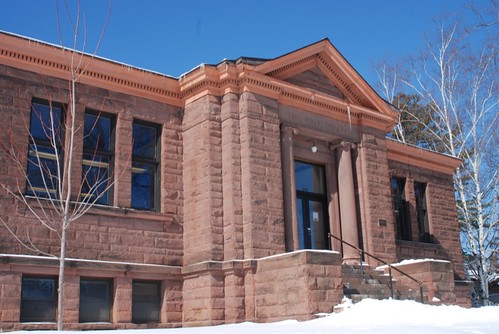
Library architecture is one of the most common examples of "palaces for the people". Many of us have a vision of what a library looks like. When I was a kid, we mostly used an old strip-mall library that used to be next to a Delchamps at the intersection of 9th and Creighton. As I got into high school and had to do research, I started using the downtown library, the PJC library, and the UWF library. When I moved away, I began using many other libraries. The two most impressive library buildings I have used were the Boston Public Library, with its works by John Singleton Copley, and the Library of Congress (regular folks can't check out books, but you can access the resources in some fabulous reading rooms). On trips to my in-laws in northern Wisconsin I have seen the central role of Carnegie libraries in many small towns. The design of a community's library conveys much about their character.

With the construction of the new downtown library coming up, we now have a chance to shape the creation of a new palace in Pensacola. Please make plans to go to the public meeting where they will welcome comments and suggestions on the design of the new library. It will be Tuesday, Dec 1, at 6:30 pm at the downtown library, 200 W. Gregory St. Your comments will help create the building that will be a legacy of this era of Pensacola history.

This building is also going to be even better than anticipated, thanks to an energy efficiency and conservation block grant the city was just awarded. This grant will provide funding to make the new building a LEED silver certified building. These improvements will likely result in lower operating costs for the building (not to mention other environmental benefits), thereby providing an ongoing savings.

I hope you will be able to come share your ideas about the new library. As you know, I think libraries are an essential component of a successful city, and this library will provide an opportunity for us to create a signature building that reflects our values and aspirations--a true palace for our community.

Tuesday, November 10, 2009

CRA Plan Update

The CRA last year commissioned a team to update the CRA master plan, incorporating many of the already existing plans (Gindroz plan, Belmont Devilliers plan). On this Thursday, Nov 12, at 5:30 at City Hall, they will be presenting the new plan. I hope you will be able to attend and see what the new plan is.

I have received an advanced copy of the plan, and I think it looks pretty great. It aims our downtown toward the future while maintaining our historic character. In some ways it is a summary of a philosophy for the direction of the downtown to help guide public and private improvements. While the CRA is going to be short on funds for the next several years with the maritime park, there are many ways the CRA and the private sector can work together to build our downtown.

I will work hard to make sure this is not another plan on the shelf. I appreciate that it has particular targeted improvements with approximate costs so we can work to include them in the budget. And it can be a spark for how we can all think about developing the many vacant sites in the CRA, both the public properties and the private. While there is a need to wait until the market is stronger for some of the development, we can still push forward many of the elements of the plan.

I hope you can attend the event on Thursday. I am sure that the plan will be posted online as the process progresses, and I will share a link. I welcome your thoughts on the plan--we need to all contribute to steering the direction of the focal point of our city, making it the city we all know it can be.

Thursday, November 5, 2009

Neighborhoods

Every day we all encounter things that we would like to see improved in our community--the poorly up kept property across the street, the safety of their kids on their way to school.

The decisions the council makes are aimed at improving our citizen's daily lives. But, ultimately, we rely on the citizens to help us direct our resources. The best tools the city has for addressing needs are our neighborhood associations.

I have visited many of our neighborhood associations. I've shared information about planned neighborhood improvements, learning about specific neighborhood issues. In Scenic Heights I even got to be present for the birth of a new association. Every meeting is a reminder for me of the central role of neighborhoods in our city.

Neighborhood associations help us get the right city services to each neighborhood. The city has a number of programs available to help associations build their neighborhoods. These include the Pensacola Community Initiatives Program (PCIP) grants, neighborhood planning, and an urban infill program. Many associations have city staff give presentations at their regular meetings, like safety presentations by the police or fire departments, or have councilmembers speak on city issues and hear concerns.

The PCIP grants, in particular, are a great resource for neighborhoods and the city. They are a matching grant for neighborhood improvements, with the city providing dollars and neighborhoods matching with cash, in-kind contributions, or volunteer time. Recent project from these grants include new gazebos in East Hill and Eastgate, entryway signs, right of way landscaping, and park improvements. Applications for the next cycle of PCIP grants are being accepted until Dec 11--more information is available.

Associations also push for additional improvements or targeted services. For example, Cordova Park lobbied hard for sidewalks, which they recently got. Others might request increased code enforcement activity or traffic calming. By coming together the residents can speak with a louder voice.

And ultimately, building community comes down to knowing your neighbors. Associations organize movies in the park and Christmas celebrations, things that help neighbors know neighbors. These relationships are the backbone of our community.

City government, government of all kinds, is a partnership with the citizens. However we structure our government, those in the leadership positions need advisers, need citizens to speak up and share their ideas, thoughts, and concerns.

If you want to get involved in your neighborhood association but need more information, let me know. Or if you don't have an association and would like to start one, I can help get you the right resources so that together we can create the Pensacola we all know it can be.